
Reproducibility review process
1. What is the reproducibility review?
The Reproducibility Review at IPIN 2026 is an optional, post-acceptance process that offers authors recognition for how their work facilitates reproducibility and constructive feedback for further strengthening this effort.
The review validates which aspects of the reproducibility guidelines are addressed in the paper and provides constructive suggestions for potential future improvements
Authors interested in improving reproducibility are encouraged to consult the Reproducibility Guidelines document, which provides practical recommendations on data sharing, code availability, and reporting practices. The Reproducibility Guidelines are not to be treated as a list of mandatory TODOs, but as a brief view of the ideal approach. Complying with part of the guidelines is always a positive step, worthy of recognition.
2. How the process works
The process consists of two strictly separate phases:
Scientific Review (Standard) – All papers
· Conducted by the Technical Program Committee
· Evaluates scientific quality, novelty, relevance, and clarity
· Determines paper’s acceptance or rejection
Reproducibility Review (Optional) – only papers that:
· Are accepted, and
· Have opted in via self-declaration
will undergo an additional reproducibility review.
This process is coordinated by a Reproducibility Committee, with reviews carried out by volunteer reproducibility reviewers. Figure 1 provides an overview of the two phases for scientific and reproducibility review.
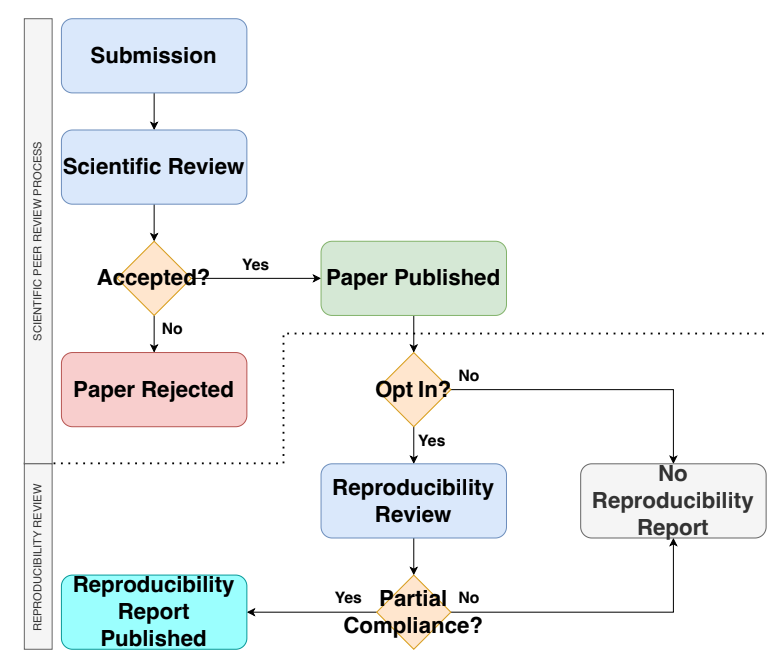
Figure 1 - Reproducibility Review Process
3. Scope of the reproducibility review
|
✔ What the review does |
✘ What the review does Not do |
|
Verifies the existence and accessibility of data, code, documentation, and methodological descriptions as claimed by the authors |
Does not attempt to fix, debug, or modify code, nor resolve missing dependencies or undocumented setup steps |
|
Identifies which aspects of the reproducibility guidelines are addressed, based on the materials provided |
Does not enforce compliance with the guidelines or require authors to meet specific criteria |
|
Provides constructive suggestions to improve reproducibility, when relevant |
Does not require authors to implement changes, and does not penalize incomplete reproducibility |
|
Focuses on reproducibility facilitation only |
Does not evaluate scientific quality, novelty, correctness, or impact, which remain exclusively part of the scientific review process |
|
May involve light interaction with authors via the reproducibility chairs to clarify minor issues or oversights |
Does not involve extensive back-and-forth, re-review cycles, or in-depth technical intervention |
4. How to participate?
During paper submission, authors can opt in to the reproducibility review by selecting the corresponding option in the submission platform.
5. Outcomes and publication of reproducibility reports
For participating papers, the outcome is a short reproducibility report. These reports:
· Describe how reproducibility is facilitated
· Indicate which aspects of the guidelines are addressed
· Suggest possible improvements, in a educative manned
Before their publication, reports are shared with authors
Publication and Visibility
· Reports will be published in a public repository (e.g., Zenodo or Open Science Framework – to be confirmed)
· Each report will:
o Cite the corresponding paper
o Provide a factual summary of reproducibility aspects
Papers with published reports will be included in a:
List of Reproducibility-Reviewed Contributions of IPIN 2026
Important Condition
If the authors of a paper opt in, but the paper does not satisfy the guidelines even partially:
→ No report will be published, and
→ There are no negative consequences
6. Recognition and Benefits
Participating in the reproducibility review offers:
· Increased visibility through publicly available reports
· Recognition as part of a set of reproducibility-reviewed contributions
· Contribution to a broader effort toward transparent and reusable research
· Constructive feedback on improving reproducibility, to inform and streamline future efforts
The initiative supports the gradual adoption of good practices in the IPIN conference series, while remaining inclusive of work with practical constraints.
You can read the Reproducibility Guidelines here
Related documents
Reproducibility Review
IPIN2026 reproducibility review v1.3 - PDF VersionReproducibility Guidelines
IPIN2026 reproducibility guidelines v1.1 - PDF Version
Important dates
- Paper Submission:
26 April 2026Extended to 10 May 2026 [Hard deadline] - Notification of Papers Acceptance: 16 June 2026
- Camera-ready submission: 15 August 2026