IPIN 2026
16th International Conference on Indoor Positioning and Indoor Navigation
5-8 October 2026, Rome, Italy

Abstract:
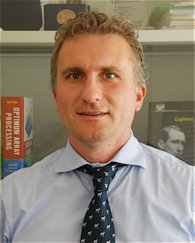
Bio: Andrea Conti was born in Bologna, Italy, on December 20, 1972. He received the Dr.Ing. degree (with honors) in telecommunications engineering and the Ph.D. degree in electronic engineering and computer science, both from the University of Bologna, Bologna, Italy, in 1997 and 2001, respectively. His research interests include wireless communications systems, localization techniques, mobile radio resource management, frequency hopping, coding in faded MIMO channels, non-linear effects in CDMA, WLAN and ad hoc networks, diversity reception techniques, wireless sensor networks and cooperative distributed telemeasurement laboratories. He is coordinator of activities for national and international projects. He serve the IEEE as Secretary of the Radio Communications Committee, Associate Editor for the IEEE Communications Letters, IEEE Transactions on Wireless Communications (2003-2009).
Abstract:
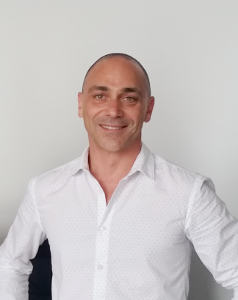
Bio:Maxime Guillaud is a senior researcher (“directeur de recherche”) at Inria in the MARACAS team in Lyon, France. He previously held positions in Huawei Technologies, Vienna University of Technology, FTW Telecommunications Research Center Vienna, EURECOM (where he received his PhD in 2005), and Bell Labs.
Abstract:

Bio: Jussi Collin has been working with statistical signal processing and inertial sensors for two decades. During his long academic career, numerous fo Jussi's studies have been published in renowned signal processing journals. In addition, Jussi has been frantes over 10 navigation related patents.
Abstract:

Bio: Daniel is a postdoctoral researcher and research software engineer. He develops methods and tools for open and reproducible geoscientific research and is a proponent for open scholarship and reproducibility.
Abstract:
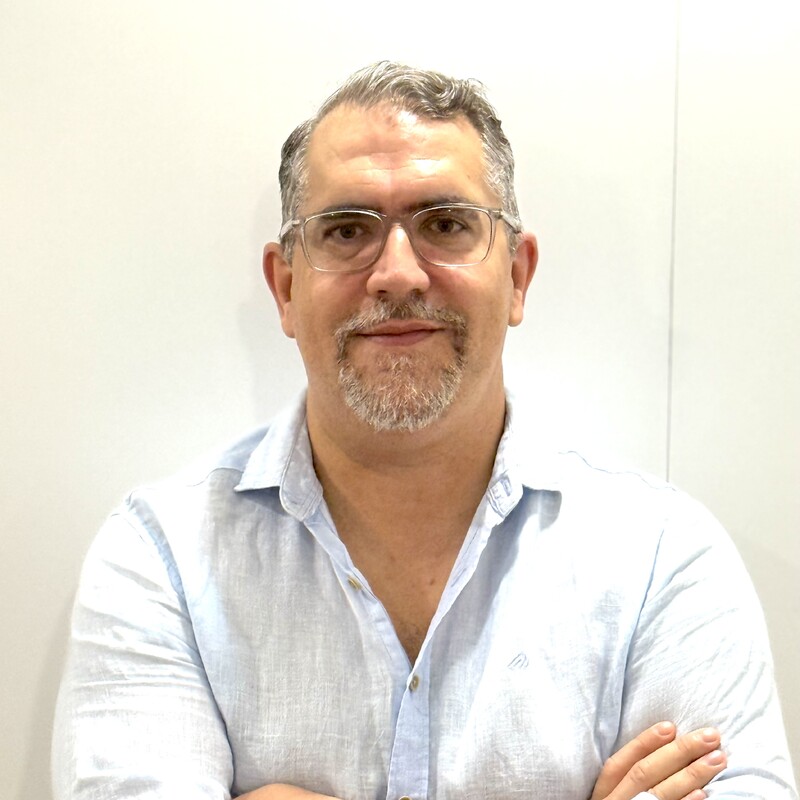
Bio: Luis combines over two decades of experience in GNSS, ADAS, and autonomous systems with a visionary drive to redefine precision and safety in mobility. Having held senior roles at u-blox, Trimble Navigation, STMicroelectronics, BMW and Apple’s Special Projects Group (SPG), he has contributed to some of the industry’s most advanced positioning and perception programs, including at Apple’s SPG and General Motors’ SuperCruise with Trimble. His expertise spans GNSS, robotics, surveying, functional safety, and AI-based localization. At NeuraLoc, Luis leads the mission to make GNSS corrections and predictive integrity services the trusted foundation for autonomous, connected, and accuracy-driven technologies worldwide.
Abstract:

Bio: Stefano Binda is an Aeronautics and Aerospace enthusiastic engineer, who covered positions in different domains, starting from verification to design and development, for custom built space qualified and ground equipment in the attitude determination and control and satellite navigation, later occupying technical managerial positions for larger systems in the satellite navigation business, as a member of the Galileo Project team at the European Space Agency. After many rewarding activities in the Galileo project, including the participation to the verification campaigns which led to the First Open Service Position fix in 2013 and the First Position Fix with Authenticated satellites in 2020, I am now helping to find and develop new and innovative navigation technologies and systems.